The Landscape of Supply Chains in Manitoba
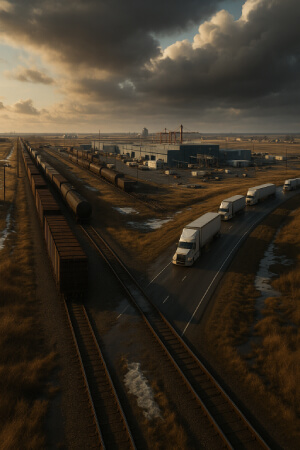
In the very center of Canada, Manitoba is geographically at a strategic location. This geographical location provides opportunities as well as problems to compete with, while numerous companies set their logistic network according to the respective railway corridors that run through the city area and clearly away from Winnipeg. Additionally, at times congestion may lead to the delay of trains using a certain rail corridor near the border. On the other hand, come spring and fall, during freeze-thaw cycles, heavy traffic flows are channeled through Highway 75 from Manitoba to United States. The highway is crucial, as it is much of the time, a site of critical concern during these seasons as it is either flooded or repaired for the emergency.
Businesses across the province are now becoming quite nimble, much more conscious of their dependence on foreign suppliers and on Canada's vendors. A distribution centre in the Inland Port region ending up depending on between four and five trucking companies to balance schedules. The hours possibly could change for a processor in Brandon who needs to be flexible in grain delivery based on a rural area's weather. It is said that this always happens, plan B, sometimes plan C, and now and again, a call to a friend who has had the problem solved before.
Why sourcing strategies have shifted
Over the past few years, many Manitoba firms have reevaluated where they get their inputs. The disruptions of 2020 lingered in memory. Companies realised that long-distance suppliers came with risks. Others admitted they had depended too heavily on a single vendor. A number of Manitoba manufacturers began seeking secondary or even tertiary suppliers within the province. They didn't replace their existing partners. They supplemented them. It created a buffer against delays and nudged more companies toward local networks that had always been available but underused.
Improving Sourcing Practices
In Manitoba, quality sourcing involves much more than just getting quotes, continued a spree. It involves knowing regional capacity, seasonal realities, and the strengths of domestic vendors who might not be listed in national directories. Several procurement managers said that knowing that a supplier can do quick-turn prototyping or rush orders is often more valuable than knowing who can provide the lowest price.
A few have gone so far as to draft inside supplier maps recording dependability, item habits and communication turnaround times. These maps are essentially living documents, adjusting after a vendor acquires a new space, or when a local choice comes up in a place like Winkler or Dauphin. Companies share informal notes amongst themselves at industry gatherings. One firm may learn that an equipment of a fabricator in Selkirk has just been upgraded, or another firm might learn of overnight service being offered by a packaging supplier in Steinbach. Such kind of data has been kept in circulation before; more companies are keeping it to take free decisions.
Sourcing from domestic vendors
Domestic suppliers often provide greater predictability. A business based in Winnipeg can simply pick up the phone and call a vendor in Morden or Swan River, without having first to consider a time zone barrier. This way, delivery windows can be adjusted more easily. In the event of major storms, suppliers may reroute shipments within hours rather than days. More and more companies claim that supporting local suppliers punches up their business operations. In light of this claim, the greater volume of business conducted within the province, the shale we can say is our supply chain as a whole.
Below is a simple comparison many Manitoba procurement teams use when evaluating vendors:
| Vendor Type | Strengths | Concerns |
|---|---|---|
| Manitoba-based supplier | Faster communication. Better seasonal awareness. Flexibility for urgent orders. | Smaller production volume in some sectors. |
| National supplier | Large capacity and consistent output. | Longer shipping times into Manitoba. Weather risk on major highways. |
| International supplier | Competitive pricing and specialized products. | Border delays. Longer lead times. Currency fluctuations. |
Logistics Realities in the Province

The province's logistics backbone relies heavily on its road network. Highway 1 moves a tremendous amount of freight across east and west. Highway 75 links trade with the United States. Rural routes support agriculture, mining, and food processing. Trucking companies know these roads intimately. They know which segments might close during storms. They know where drivers will lose time. Many carriers adjust their schedules at certain times of year. Their clients are aware of this and adjust their inventory plans accordingly.
Rail is a different story. It offers efficiency and scale but can leave companies waiting if connections slow down. Some firms in Winnipeg and Brandon have invested in expanded on-site storage so they can tolerate brief rail delays. Others have created shared logistics agreements with neighbouring companies to pool volume and secure more reliable service.
Air transport plays a smaller but significant part. The Winnipeg airport ships time-sensitive items, particularly for northern communities that rely on weekly or monthly deliveries. Those communities have their own supply challenges, often tied to weather or seasonal road availability. Businesses operating in the north build their logistics calendars around those windows.
Using data without overcomplicating it
Many Manitoba companies have begun using basic analytics to track delivery patterns. They look at average delay times during certain months. They track how often a vendor meets estimated shipping windows. The data helps them anticipate slowdowns rather than reacting to them. There is no need for complex dashboards. Spreadsheets work fine. Managers use them to build a picture of what “normal” looks like. When the picture changes, they know when to adjust orders.
Strengthening Vendor Relationships
Every supply chain in the province depends on relationships. Vendors appreciate clients who communicate early. Clients rely on vendors who provide honest timelines. Most long-term partnerships in Manitoba look more like collaborations than transactions. A supplier might call ahead to warn about limited capacity in a certain product. A manufacturer may share its seasonal forecast months in advance so its partners can plan.
In a recent conversation at a Winnipeg trade event, several procurement leads mentioned how candid conversations helped keep their operations stable during turbulent years. They talked about vendors who admitted when freight delays were likely and offered alternatives. These relationships survive because both sides understand that transparency solves problems more quickly than perfect paperwork.
How companies evaluate vendors
Various Manitoba firms have an informal evaluation system while rating vendors. Price is important, but so is responsiveness. Some measure the response speed of suppliers for emails. Others may look at willingness to fix problems. Take, for instance, a supplier who takes an emergency order for your company in the middle of the night- now you have a promise of business that will be returned to them because of that single act. Whereas a vendor, one that does not communicate well during delays, is essentially one who is quickly losing his or her grip.
Here is an example of what some procurement teams monitor:
- Average delivery window
- Frequency of communication
- Seasonal reliability
- Ability to handle volume fluctuations
- Customer support responsiveness
These categories help companies make decisions during busy periods when the wrong call could delay production.
Resiliency Planning for Manitoba Operations
Companies across the province have become more deliberate about planning for disruptions. Many have begun holding internal reviews each spring to examine what went well and what fell apart during winter. They look at how their suppliers managed extreme cold snaps. They also look at their own bottlenecks.
Some have created partnerships with backup transportation providers. Others have added inventory in key categories. A few have established regional storage points so they are not fully dependent on a single facility. These strategies take time to develop but provide a steady cushion when the unexpected arrives.
Scenario planning
Businesses often prepare scenarios based on recent history. A trucking delay on Highway 75. A rail slowdown near the border. A major cold snap that temporarily reduces labour availability. They walk through how their operations would respond. Who needs to be notified. Which secondary suppliers they would call. Whether production schedules need to shift.
Scenario planning might sound elaborate, though in practice it often looks like a single afternoon in a conference room with a whiteboard. The conversations matter more than the paperwork.
Building Long-term Stability

Long-term stability in Manitoba supply chains depends on more than logistics. It depends on building a network of reliable partners and designing operations that can bend without breaking. Many companies have started investing in training for their procurement teams. They want staff who understand local industries and can spot emerging suppliers early. The province sees new businesses appear every year. Getting to know them before competitors do can offer an advantage.
Some firms have also begun looking at sustainability in their supply chains. Not in an abstract way. They focus on reduced waste, smarter packaging, and shorter delivery routes. A manufacturer might decide to buy materials from within Manitoba because the deliveries come from three hours away instead of three provinces away. The choice saves time and reduces emissions. It also strengthens the local business community.
Case Study Style Snapshot Manitoba Adjustments
During a cold stretch in January, a Winnipeg-based equipment distributor noticed delays in its westbound shipments. Instead of waiting for the backlog to clear, the company contacted a smaller carrier headquartered in Brandon. That carrier was running a different routing pattern and still had openings. The distributor rerouted a portion of its deliveries through the new partner and avoided a full-day delay. Afterward, the company kept the relationship active in case similar situations occurred again.
Another example came from a mid-sized food processor near Winkler. When packaging materials became difficult to source from a supplier in Alberta, the firm turned to a smaller Manitoba producer it had met at a trade show. The orders were smaller at first. Over several months, the local supplier increased its output and secured a standing contract. Both companies now benefit from the shorter supply line.
Looking Forward
Manitoba's supply chains are unlikely to get simpler. Weather, geography, and global pressures guarantee new challenges every year. But businesses in the province have become better at managing uncertainty. They build layered sourcing strategies. They strengthen vendor relationships. They gather data to spot trouble early. Above all, they rely on networks of regional partners who understand the realities of doing business in the Prairies.
Companies that continue investing in local suppliers, flexible logistics, and thoughtful planning will find themselves steadier during sudden shocks. They may even uncover new opportunities when others are scrambling. Manitoba has always rewarded those who prepare for the unexpected. Its supply chain strategies are no different.
Dive Deeper
Manitoba food companies showcased their products at ANUGA, one of the world’s largest food trade shows in Cologne, Germany.
— Manitoba Agriculture (@MBGovAg) October 15, 2025
Manitoba Agriculture sponsored the B2B Meeting Space in the Canadian Pavilion, supporting global connections and market growth.
🔗 https://t.co/bqJQVQxFal pic.twitter.com/KkT9mTNSBZ
With the kind help from

The B2B buying journey is changing. Industrial buyers now expect the ease, personalization and fluidity of B2C experiences.
— Industry Today Media (@Ind_today) December 3, 2025
The article below reveals how manufacturing suppliers & industrial vendors can evolve their approach to win in this new landscape:https://t.co/WGSZz5D2Kp pic.twitter.com/X2KN9WCkIP